








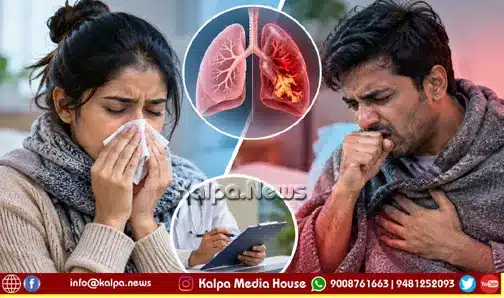
Learn why pneumonia should never be mistaken for a common cold. Understand the key symptoms, warning signs, health risks and importance of early diagnosisi and timely treatment to prevent serious complecations.
Kalpa Media House | Special Article |  It often begins like an ordinary cold. A runny nose, mild fever, cough and a feeling of tiredness may not seem like anything unusual. Most people reach for a home remedy, take a few days of rest and expect to recover. But what if the cough refuses to go away, the fever persists and breathing gradually becomes difficult?
This is where people need to be careful. What appears to be a common respiratory infection could sometimes be pneumonia, a lung infection that can become serious if not recognised and treated promptly.
The important thing to remember is that not every cough is pneumonia, but persistent or worsening respiratory symptoms should never be ignored.
What makes pneumonia different from a common cold?
A common cold primarily affects the upper respiratory tract, including the nose and throat. It is usually caused by viruses and often improves within a week.
Pneumonia, on the other hand, is an infection that affects the lungs. It can be caused by bacteria, viruses and, less commonly, fungi. During the infection, the tiny air sacs in the lungs, called alveoli, may fill with fluid or pus, making it difficult for the body to absorb enough oxygen.
While both conditions can cause coughing and fever, pneumonia may produce additional symptoms such as breathlessness, chest pain while breathing or coughing, chills and extreme fatigue.
When should you become concerned?
One important warning sign is a cough and fever that persist or worsen instead of gradually improving. People with pneumonia may experience rapid breathing, difficulty breathing, chest discomfort and significant weakness.
However, symptoms can vary. Older adults may not develop a high fever and may instead experience confusion, unusual drowsiness or a sudden decline in their general health.
Also Read>> ಬಂಗಾಳಕೊಲ್ಲಿಯಲ್ಲಿ ಅಕ್ವಾನ್ ಚಂಡಮಾರುತ ಭೀತಿ; ನ.18, 19ರಂದು ಚೆನ್ನೈಗೆ ಅತಿ ಭಾರೀ ಮಳೆ ಎಚ್ಚರಿಕೆ!
In children, parents should watch for fast breathing, difficulty feeding, unusual sleepiness and the chest moving inward beneath the ribs while breathing.
Regular handwashing, avoiding tobacco smoke, maintaining good nutrition and managing existing health conditions also help protect respiratory health.
People often make the mistake of waiting for severe symptoms before consulting a doctor. This delay can be particularly risky for young children, older adults and individuals with diabetes, heart disease, chronic lung conditions or weakened immunity.
Can pneumonia be diagnosed early?
Yes. A doctor can assess symptoms, check oxygen levels and listen to the lungs using a stethoscope. Depending on the findings, a chest X-ray, blood tests or other investigations may be recommended.
Treatment depends on the cause. Bacterial pneumonia may require antibiotics, while viral pneumonia needs appropriate supportive care and, in selected cases, antiviral treatment. Antibiotics do not work against viral infections and should never be taken without medical advice.
Most importantly, treatment should not be delayed when pneumonia is suspected.
Can pneumonia be prevented?
Certain measures can significantly reduce the risk of infection and severe illness. Recommended vaccinations, including pneumococcal, influenza and other age-appropriate vaccines, play an important role.
Regular handwashing, avoiding tobacco smoke, maintaining good nutrition and managing existing health conditions also help protect respiratory health.
Do not dismiss a worsening cough
A common cold usually gets better with time. Pneumonia can begin with similar symptoms, but the infection may progress and affect breathing.
Severe breathlessness, bluish lips, confusion or difficulty staying awake require emergency medical attention. Persistent fever, worsening cough or fast breathing should prompt timely medical evaluation.
Contact For News & Advertising: Whatsapp: 9008761663, 9481252093 – info@kalpa.news